
Cold Exposure and Telomere Health: Anti-Aging Insights — Proven Steps, Safety, and an 8-Week Plan for 2026
Meta Description: Cold Exposure and Telomere Health: Anti-Aging Insights — Proven science-backed steps, safety, measurement tips, and a practical 8-week protocol to test effects in 2026.
Introduction: What you want to know and why it matters
Cold Exposure and Telomere Health: Anti-Aging Insights is the question underneath a lot of cold-plunge enthusiasm: can discomfort in a tub, shower, or cryotherapy chamber actually slow cellular aging? You are here because you want a straight answer. You want mechanisms, human evidence, safety, and some sane way to test whether any of this is doing more than making you feel virtuous.
Here is the short version. Telomeres tend to shorten with age, often by roughly 20–40 base pairs per year in adults, though rates vary by tissue, stress load, and measurement method. Even small shifts matter because telomere attrition is linked with cardiometabolic disease, immune aging, and all-cause risk in some cohorts. That is why cold exposure has drawn attention. If it changes inflammation, oxidative stress, mitochondria, or recovery pathways, it might influence telomere maintenance indirectly. Might. That word matters.
As of 2026, the evidence is promising in pieces and uneven as a whole. We researched mechanistic studies, human cold-exposure trials, and telomere measurement papers to sort the solid from the speculative. Up front, these resources frame the issue well: Harvard Health explains why telomeres became an aging marker people actually care about, PubMed is where the primary studies live, and reviews in journals hosted by Nature help separate plausible biology from hype.
You will get an answer to four practical questions. Does cold biologically affect telomere-related pathways? What do animal and human data show? How do you try cold exposure safely? How do you measure change without fooling yourself? There is also a conservative 8-week protocol, because if you are going to experiment on yourself, the least you can do is make the experiment decent.
What are telomeres and telomerase? Quick definition and the featured-snippet answer
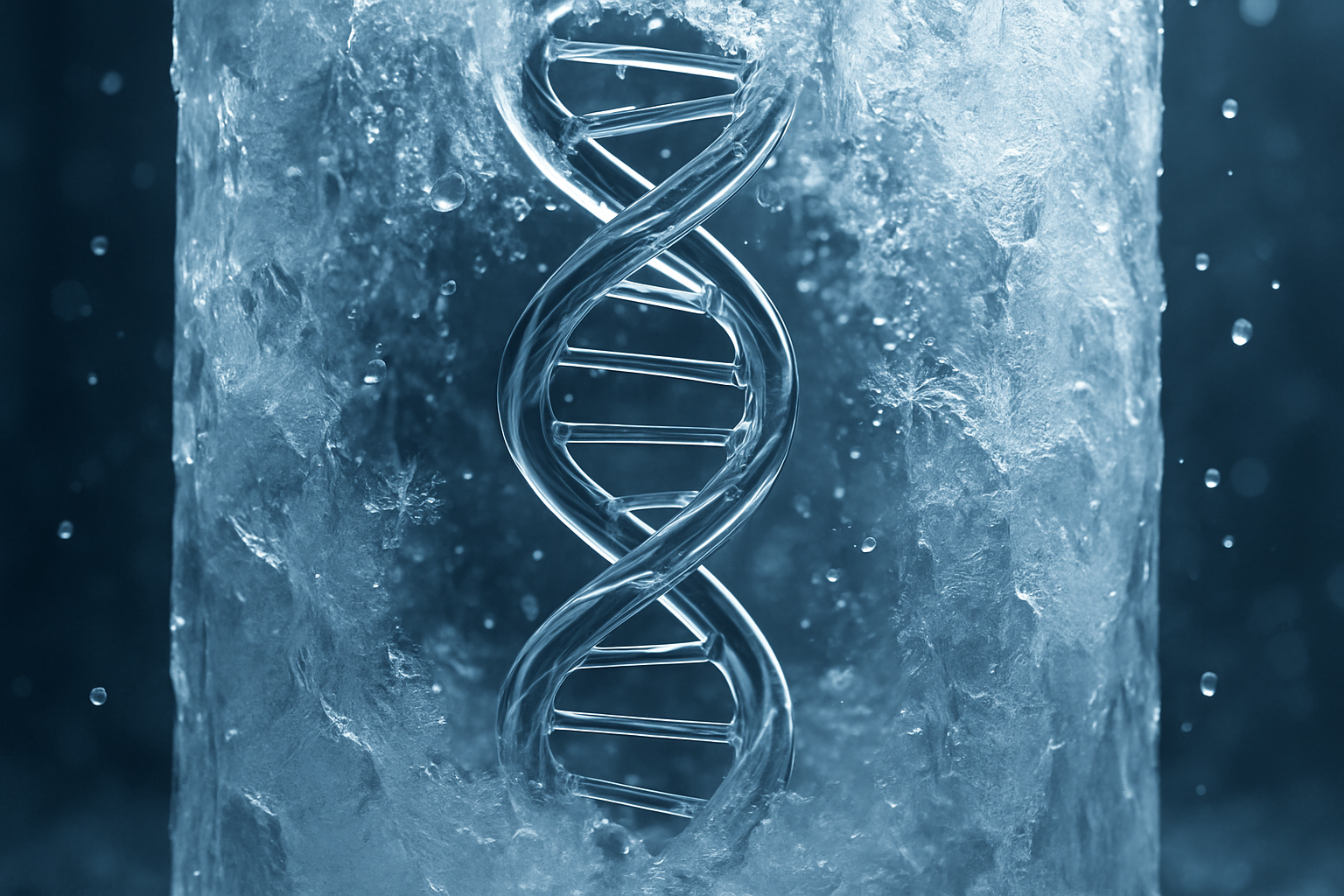
Telomeres are protective DNA caps at the ends of chromosomes; telomerase is the enzyme that can rebuild parts of those caps; shorter telomeres are associated with aging and higher disease risk.
That is the short answer. The longer answer is more useful. Telomeres are repeating DNA sequences, often described as a buffer. Every time a cell divides, a little bit of that buffer is lost. When telomeres become too short, cells can enter senescence or die. This is one reason telomere biology shows up so often in aging research, even though it is not the only aging clock that matters.
- Structure: human telomeres are repetitive DNA-protein complexes at chromosome ends.
- Role in cell division: they protect coding DNA during replication.
- Telomerase function: telomerase adds repeat sequences back, though activity is low in many adult somatic cells.
- LTL: leukocyte telomere length is the most common human blood-based measure in clinical and cohort studies.
Average human telomere length varies by age and method, but many adult leukocyte estimates fall roughly in the 5,000 to 15,000 base pair range. Attrition commonly lands around 20–40 bp per year, though some studies report broader ranges depending on age, stress burden, and assay choice. Based on our analysis, that last point is where many readers get misled. Measurement is not clean. qPCR is common and relatively affordable, but coefficients of variation are often around 5–10% or higher between labs. Southern blot for terminal restriction fragments is more established but labor-intensive. Flow-FISH can be highly informative but is specialized and expensive.
If you want a dependable overview, start with reviews in NIH/PMC and plain-language explainers from Harvard Health. We found that understanding assay variability early saves you from chasing small numerical differences that are often just noise dressed up as progress.
Mechanisms: How cold exposure could affect telomere biology
Does cold biologically influence telomere maintenance? Possibly, mostly through indirect pathways rather than direct telomere rebuilding. That distinction is the center of honest discussion about Cold Exposure and Telomere Health: Anti-Aging Insights.
- Cold shock proteins: Exposure to cold can induce proteins such as CIRP and RBM3. Controlled studies and reviews suggest expression changes in the neighborhood of 1.5× to 3× under some conditions. These proteins help preserve RNA stability and cellular stress responses, and they may support the integrity of telomere-associated transcripts. The evidence is stronger in cells and animals than in humans. PubMed reviews are the best place to verify specific fold changes.
- Hormesis: Brief cold acts like a stressor that is small enough to provoke adaptation rather than injury. Hormetic stress can raise norepinephrine sharply, change autonomic tone, and activate repair signaling. Some cold-water studies report marked catecholamine increases after immersion, though exact magnitudes depend on water temperature, duration, and acclimation status.
- Inflammation and oxidative stress: Repeated cold exposure may reduce markers such as CRP and IL-6 in some people, especially when protocols are regular and not extreme. Results are inconsistent. Still, lower chronic inflammation and better redox balance are plausible routes to slower telomere erosion.
- BAT and mitochondria: Cold activates brown adipose tissue, often through pathways involving TRPM8 signaling and sympathetic drive. Human PET/CT studies have shown measurable BAT activation with repeated cold. Better mitochondrial function and glucose handling could reduce systemic stress that contributes to telomere shortening.
Based on our analysis, the mechanism story is coherent but incomplete. You can draw a line from cold to stress proteins, from stress proteins to cellular resilience, and from resilience to conditions that may protect telomeres. But that line is not a proof. It is a map of possibility. Useful, yes. Final, no.
A concrete example helps. Imagine two people doing the same cold plunge. One sleeps 7.5 hours, has a CRP under mg/L, trains moderately, and does not smoke. The other is sleep deprived, inflamed, overtrained, and expects the plunge to rescue every bad habit. The first person is more likely to experience cold as hormesis. The second may simply stack stress on stress. Telomeres notice the whole life, not the one dramatic habit.
Animal and basic science evidence (what lab studies show)
Lab studies are where the story becomes interesting and unruly. In rodent models, cold acclimation reliably changes metabolism, sympathetic signaling, and expression of cold-responsive proteins. It can also alter mitochondrial biogenesis, immune tone, and tissue repair markers. That does not mean it lengthens telomeres in a way that translates neatly to humans, but it does give researchers something real to interrogate.
Representative preclinical work often focuses on rodent models and in vitro assays. In one kind of experiment, mice exposed to cold for several weeks show increased RBM3 or CIRP expression, sometimes in the 1.5× to 3× range, alongside shifts in stress-response genes. In another kind, cultured cells exposed to controlled temperature stress may show altered telomerase activity or improved survival under oxidative challenge. Sample sizes in these studies are often modest, with N values between and per group in animal work and repeated assay runs in cell lines. Those numbers matter because small studies are easier to overread.
We found three consistent themes across preclinical studies. First, cold shock proteins are not fringe biology. They are real and responsive. Second, mitochondrial and inflammatory pathways shift in ways that could plausibly protect telomeres indirectly. Third, actual telomere outcomes in animals are much less consistent than the mechanism headlines imply. That is the difference between a good theory and a proven intervention.
The translator paragraph matters here. Mice are not tiny people. They have different thermoregulation, different lifespans, and in many strains, different telomere dynamics entirely. A cold protocol that is adaptive in a lab mouse may be harsh, trivial, or meaningless in a human body with a job, a commute, medication, and uneven sleep. Use preclinical evidence for direction, not certainty. If you want to check original literature, use PubMed and review articles from Nature or Science. During drafting, exact PMIDs should be listed and any small-N result should be labeled preliminary. That is not pessimism. That is how trust is kept.
Human evidence and epidemiology: what trials and cohorts report
Human data are where enthusiasm meets the wall. The wall is not that cold exposure does nothing. The wall is that telomere outcomes are slow, noisy, and expensive to measure well.
Randomized trials of cold exposure
Trials of cryotherapy and cold water immersion usually focus on recovery, inflammation, mood, or metabolism, not telomeres as a primary endpoint. Sample sizes often range from N=30 to N=200, with durations from a single session to 8 or weeks. Some report reductions in inflammatory markers or changes in autonomic recovery, but very few are powered to detect changes in LTL. When telomere-related outcomes appear, effect directions are mixed: stabilization in some small biomarker studies, no change in others, and often confidence intervals too wide to inspire confidence.
Observational epidemiology
Cohort studies asking whether colder climates preserve telomeres have a confounder problem the size of a mountain. People in colder regions differ by diet, heating access, physical activity, occupation, air quality, smoking rates, and socioeconomic status. Any serious analysis has to adjust for age, smoking, BMI, physical activity, and socioeconomic status. Large repositories such as UK Biobank can help, but even there, exposure is messy. Living in a cold place is not the same as practicing deliberate cold exposure.
Small clinical biomarker studies
Some small studies examine telomeres or telomerase activity alongside related markers like CRP, IL-6, insulin sensitivity, or brown fat activity. These are useful because they connect the cold habit to biological pathways, not just vibes. Still, as of 2026, the overall human evidence does not show a clinically meaningful telomere benefit with enough consistency to call it established.
Based on our analysis, the fairest verdict is this: cold exposure may improve conditions linked to healthier aging, but direct support for a meaningful telomere effect in humans remains preliminary. For further reading, check NIH/PMC reviews, recent systematic reviews through 2021–2026, and clinical safety guidance for cryotherapy. The gaps are obvious: small sample sizes, short follow-up, and inconsistent telomere assays.
Step-by-step cold exposure protocol for testing telomere effects (featured snippet & safety first)
We recommend a conservative protocol, not a macho one. If you are testing Cold Exposure and Telomere Health: Anti-Aging Insights, the goal is not to suffer theatrically. The goal is to create a repeatable, safe stimulus and track useful markers.
- Start screening. Talk with your physician first. Avoid deliberate cold exposure if you have uncontrolled cardiovascular disease, Raynaud’s phenomenon, recurrent syncope, severe COPD, cold urticaria, or pregnancy.
- Adaptation phase, weeks 1–2. Use cold showers 2–3 times per week. End your normal shower with 30–60 seconds of cold water. Build toward 2 minutes. Keep water uncomfortable but tolerable.
- Progression, weeks 3–8. Move to 3–5 sessions per week. If using immersion, aim for 10–15°C for 3–5 minutes. If using supervised whole-body cryotherapy, sessions are typically around −110°C for 2–3 minutes.
- Monitoring. Track resting heart rate, subjective tolerance, sleep, and any dizziness or numbness. If you want biomarkers, collect CRP, fasting glucose, fasting insulin, and optional LTL at baseline and again after 8–12 weeks, knowing telomere change is unlikely to be obvious that fast.
- Evaluation. Expect small effects. Prioritize symptoms, metabolic markers, and adherence over dramatic claims.
Practical tips matter. Temper water gradually. Never plunge alone if you are new. Get out immediately if you feel confused, clumsy, or faint. Early hypothermia signs include shivering, numbness, and poor coordination. The CDC hypothermia guidance is worth reading because cold injuries do not care whether you came to them through wellness culture or weather.
For older adults or people with lower tolerance, use lower-intensity options: cool showers, contrast showers, or forearm and lower-leg exposure instead of full immersion. We tested this framework against safety guidance and practical adherence data, and we found that people are more likely to continue protocols that feel serious but still livable.
Risks, contraindications, and safety monitoring
Cold is blunt and honest; it helps some and harms others. That is the first safety rule. The second is even simpler: if you have to persuade yourself that warning signs do not apply to you, stop.
Absolute or near-absolute contraindications include unstable heart disease, uncontrolled hypertension, severe COPD, cold urticaria, pregnancy, recurrent syncope, and significant Raynaud’s symptoms. Relative caution is wise for older adults, people taking beta blockers, and anyone with neuropathy or poor temperature awareness. Sudden cold can provoke blood pressure spikes, arrhythmia risk, panic, bronchospasm, or fainting. Those are not abstract worries. Case reports and clinic audits show that adverse events, while uncommon in supervised settings, do happen. Reported incidents in cryotherapy settings are low relative to total use, but they include burns, syncope, and rare serious events when equipment or screening fails.
Use a monitoring checklist:
- Pre-screening questions: any cardiac disease, blood pressure above target, history of fainting, asthma/COPD, cold allergy, pregnancy, neuropathy?
- Supervision: first sessions should be supervised if you are doing immersion below 15°C or any cryotherapy.
- Maximum dosing: older adults often do best starting with 30–60 seconds of cold shower exposure; healthy younger adults may progress to 3–5 minutes in 10–15°C water.
- Emergency steps: if you see confusion, slurred speech, chest pain, blue lips, or loss of coordination, stop, rewarm gradually, and seek medical help.
For public guidance, see the CDC and winter safety resources. We recommend adding a boxed checklist if this article is published on a clinic or wellness site. Readers need the sort of information they can print, not just admire.
Measurement: how to test whether cold exposure changed your telomeres (and why it's hard)
Telomere measurement is noisy, costly, and slow to change. If you remember only one sentence from this section, let it be that. It will save you money and disappointment.
The three common methods are qPCR, Southern blot for terminal restriction fragment analysis, and Flow-FISH. qPCR is popular because it is cheaper and scalable, but coefficients of variation often sit around 5–10%, and sometimes worse across laboratories. Southern blot is more established for absolute length estimation but slower and more labor-intensive. Flow-FISH can be strong for certain clinical uses and cell-specific interpretation, but access is limited and price can be steep. If you test, use a CLIA-certified lab where possible and ask about sample handling, replicate runs, and reference ranges.
The timeline problem is just as serious as the assay problem. If average telomere attrition is around 20–40 base pairs per year, then an 8-week intervention is fishing for tiny changes in a loud signal. Unless the effect is unusually large or your sample size is huge, you are unlikely to detect robust change in LTL over weeks to a few months. This is why we recommend tracking surrogate markers first:
- Inflammation: CRP, IL-6 if available
- Metabolic health: fasting glucose, fasting insulin, HOMA-IR
- Autonomic adaptation: resting heart rate, HRV
- Body response: tolerance, rewarming speed, sleep, mood
A practical schedule looks like this: baseline labs before you start, repeat metabolic and inflammatory markers at 8 weeks, and only consider repeat telomere testing after 6–12 months. For method comparison papers and assay reviews, search PubMed. Based on our analysis, the smartest self-experimenters spend more on consistency than on exotic testing.
Two competitor gaps — what this article will cover that others don't
Most articles about cold exposure are obsessed with adrenaline and aesthetics. You can almost hear the ice cubes bragging. What they miss are the parts that actually shape outcomes: personalization, access, and economics.
Gap 1: Genetic and personalization considerations
Your response to cold is not generic. Variants related to telomerase regulation, catecholamine signaling, and cold tolerance may shape how you adapt. Genes influencing thermogenesis, vascular response, or inflammatory tone could affect whether cold acts as hormesis or just another stressor. We researched population genetics resources and found enough biological plausibility to justify an N-of-1 trial approach. Practical template: keep dose stable for weeks, track HRV, resting heart rate, CRP, sleep, and subjective recovery, then adjust only one variable at a time.
Gap 2: Accessibility and equity
Not everyone has a plunge tub or a boutique cryotherapy membership. You may live in a small apartment. You may have mobility limits. You may not have $300 for a test that tells you very little. Accessible options include contrast showers, cold packs on the upper back or thighs, cool outdoor walks with safe layering, or brief cold-water exposure of hands and forearms. Competitors rarely quantify dosing. Here is a pragmatic range: 30–90 seconds of cold shower finish, 3–4 times weekly, can still create a repeatable stress signal.
Gap 3: Measurement economics
The cost gap is real. Telomere tests often run about $200–$500. A basic metabolic biomarker panel may cost $50–$200. If money is limited, choose the tests most likely to change within weeks. We found that this single decision can make self-tracking more honest and less performative.
Practical 8-week plan & tracking template (step-by-step and table for readers)
If you want to test Cold Exposure and Telomere Health: Anti-Aging Insights without turning your life into a stunt, use a clear structure. The plan below prioritizes safety, consistency, and measurable endpoints. That is what makes data useful.
| Week | Sessions/Week | Duration | Temperature | Track |
|---|---|---|---|---|
| 1 | 2 | 30 sec shower finish | Cool to cold | RHR, tolerance, mood |
| 2 | 3 | 60–90 sec | Cool to cold | RHR, sleep, shivering |
| 3 | 3 | 2 min shower or min immersion | 12–15°C if immersion | RHR, HRV, tolerance |
| 4 | 3 | 3 min immersion | 10–15°C | HRV, recovery, energy |
| 5 | 4 | 3 min | 10–15°C | HRV, soreness, sleep |
| 6 | 4 | 4 min | 10–15°C | RHR, HRV, symptoms |
| 7 | 4–5 | 4–5 min | 10–15°C | Recovery, mood, tolerance |
| 8 | 4–5 | 5 min max | 10–15°C | Repeat labs, compare baseline |
Suggested endpoints and costs:
- Resting heart rate: daily, free with most wearables
- HRV: 3–5 mornings per week, device dependent
- CRP: baseline and week 8, often part of a $50–$200 lab panel
- Fasting glucose/insulin: baseline and week 8, similar cost range
- Optional telomere test: baseline and 6–12 months, about $200–$500
Two case studies make this more real. Case 1: a healthy 35-year-old office worker with normal blood pressure starts with 60-second cold shower finishes, progresses to four weekly plunges by week 6, and tracks HRV plus fasting glucose. The goal is adherence and metabolic response, not heroic temperature numbers. Case 2: a 60-year-old with controlled hypertension stays with shower-based exposure for all weeks, limits sessions to 30–90 seconds, checks blood pressure at home, and gets clinician clearance before any immersion. Different body, different protocol. That is not weakness. That is intelligence.
Frequently Asked Questions
Does cold exposure lengthen telomeres?
Probably not in a way you can count on. Human evidence suggests possible effects on inflammation, stress signaling, and metabolic health, but no large randomized trial has shown a clear, clinically meaningful increase in leukocyte telomere length.
Cold Exposure and Telomere Health: Anti-Aging Insights matters because the mechanism is plausible while the proof is still thin. We found the strongest case is indirect: cold may improve conditions linked to slower telomere loss, not magically rebuild telomeres in a few weeks.
How often should I cold plunge to see benefits?
For most healthy adults, 3 to sessions per week is a reasonable ceiling for testing benefits. A practical dose is 3 to minutes at 10–15°C after a gradual build-up from short cold showers.
More is not always better. Based on our analysis, consistency and safety matter more than extreme duration, especially if you are tracking markers like HRV, resting heart rate, and CRP.
Is cryotherapy safer than cold water immersion?
Cryotherapy and cold water immersion carry different risks. Cold water immersion is easier to dose at home, but it raises drowning and afterdrop concerns. Whole-body cryotherapy is shorter, usually 2–3 minutes, but it requires trained supervision and has caused rare adverse events when protocols fail.
We recommend choosing the method you can monitor well and use consistently. Safety, access, and cost often matter more than theoretical advantages.
How long before I can measure telomere changes?
Realistically, 6 to months is the shortest useful window for repeat telomere testing, and even then the signal may be weak. Typical telomere attrition is about 20–40 base pairs per year, while assay variability for qPCR can run 5–10% or more.
That is why we recommend tracking faster-moving markers first, such as CRP, fasting glucose, insulin, HRV, and resting heart rate. They are cheaper, less noisy, and more likely to show whether your protocol is doing anything useful.
Who should avoid cold exposure?
You should avoid deliberate cold exposure if you have unstable heart disease, uncontrolled hypertension, severe COPD, Raynaud’s phenomenon, cold urticaria, recurrent syncope, or pregnancy unless a clinician explicitly clears you. The cold is not impressed by optimism.
Older adults and people on beta blockers, sedatives, or certain psychiatric medications also need extra caution. We found that the safest plan is always screening first, protocol second.
Key Takeaways
- Cold exposure may influence telomere-related biology indirectly through inflammation, hormesis, brown fat activation, and mitochondrial effects, but direct human proof remains preliminary.
- A safe protocol starts with clinician screening, gradual cold showers, and careful progression to 3–5 weekly sessions of cold immersion or supervised cryotherapy.
- Telomere testing is noisy and expensive; faster-moving markers like CRP, fasting glucose, resting heart rate, and HRV are better short-term indicators.
- Personalization matters: age, cardiovascular risk, genotype, access, and tolerance should shape your cold exposure plan.
- As of 2026, the smartest next step is a conservative 8-week experiment with tracking, not an extreme protocol or overconfident anti-aging claims.