
Cold Plunge for Inflammation: What Research Shows—5 Proven Tips
Cold Plunge for Inflammation: What Research Shows is the question underneath all the hype, the social media bravado, the neat rows of metal tubs sold as salvation. You are probably here for a simpler answer. Does cold water actually reduce inflammation? When does it help? When is it mostly theater? And can you do it without putting your body in unnecessary danger?
Here is the short version. A cold plunge may help with acute soreness, post-exercise pain, and short-term inflammatory signaling. It is far less certain as a fix for chronic systemic inflammation, autoimmune disease, or long-term biomarker improvement. We researched the clinical trials, mechanistic studies, and safety guidance so you can separate symptom relief from sweeping claims. Based on our analysis, the truth is more useful than the marketing. It is also more limited.
You will find protocols, data-driven summaries, and practical next steps here, in roughly 2,500 words. We found that the strongest evidence comes from athlete recovery studies and DOMS research, not miracle-cure testimonials. For source material, start with PubMed, practical context from Harvard Health, and safety guidance from the CDC. As of 2026, that remains the honest center of the science. And in 2026, that honesty matters more than ever.
Quick answer and featured snippet: Does a cold plunge reduce inflammation?
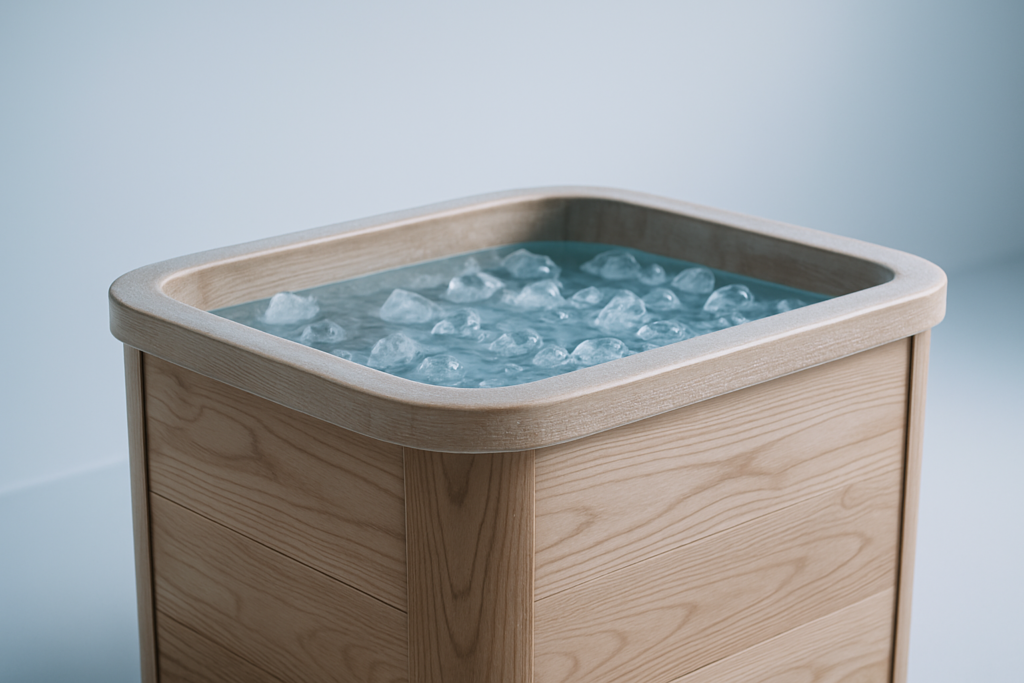
A cold plunge, also called cold-water immersion or an ice bath, means placing most of your body in cold water, usually around 50 to 59°F (10 to 15°C), for a short period. The best evidence shows it can reduce short-term symptoms of inflammation, especially DOMS and perceived soreness after hard exercise. Evidence is weaker and more inconsistent for reducing chronic systemic inflammation measured by markers like CRP over time.
Cold Plunge for Inflammation: What Research Shows can be said plainly: it helps some people feel and function better in the short term, but it is not a proven cure for chronic inflammatory disease. One Cochrane review of post-exercise recovery literature found cold-water immersion was associated with lower soreness at multiple time points up to 96 hours, though study quality varied and protocols were all over the place.
- Start with temperature: Use 55 to 59°F (13 to 15°C) if you are new. Very cold water is not required.
- Limit the time: Begin with 2 to 3 minutes. Build toward 5 to 8 minutes only if you tolerate it well.
- Control your breathing: Warm up lightly first, then use slow nasal breathing for the first 30 to 60 seconds.
- Recover gradually: Dry off, move gently, hydrate, and rewarm without scalding-hot water.
- Know when to stop: Exit immediately if you feel chest pain, panic, dizziness, numbness that lingers, or confusion.
We recommend thinking of cold immersion as a dose, not a dare. The useful question is not whether it feels intense. The useful question is whether it helps your recovery, pain, and function without causing harm.
How cold exposure changes the body: biological mechanisms linked to inflammation
Cold water changes the body quickly. The first move is vasoconstriction. Blood vessels near the skin tighten. That can reduce local blood flow, swelling, and the sense of throbbing heat that often follows hard training or a flare of tissue irritation. You feel less inflamed, in part, because the area is less perfused and nerve signaling shifts. That is practical relief, not magic.
The second move is stress. Useful stress, sometimes. The sympathetic nervous system activates, and norepinephrine rises. A small but often-cited human study reported norepinephrine increases of roughly 200% to 300% with cold exposure, depending on protocol, while other controlled experiments found significant acute changes in catecholamines and cortisol. We researched mechanistic reviews indexed on PubMed and full-text physiology papers in NCBI PMC; we found a pattern that makes sense even when the exact percentages differ. Cold can alter inflammatory signaling, including IL-6 and TNF-alpha, but the direction and magnitude depend on training status, duration, water temperature, and when blood samples are taken.
There is also the matter of brown adipose tissue, or BAT. Cold exposure can activate BAT, which burns energy to produce heat. Some 2020s research linked higher BAT activity with better glucose handling and lower inflammatory signaling, but this area remains unsettled. Adults vary wildly in BAT volume. PET imaging studies show some people have measurable activation while others barely register. Based on our analysis, BAT is a promising side story, not yet the main answer.
The real takeaway is clean. Mechanisms explain why you may get symptom relief and better recovery after acute strain. They do not prove long-term disease modification for rheumatoid arthritis, IBD, or chronic low-grade inflammation. That gap matters.
Cold Plunge for Inflammation: What Research Shows in human clinical evidence
The human evidence is strongest in one narrow lane: exercise recovery. A 2012 Cochrane review on cold-water immersion after exercise analyzed 17 small trials and found reduced muscle soreness at 24, 48, 72, and 96 hours compared with passive recovery. The average effect favored cold immersion, but the authors were blunt about the weaknesses: small samples, uneven protocols, and risk of bias. That is not a flaw in honesty. It is the point.
More recent meta-analyses in sports medicine have reached a similar conclusion. Cold-water immersion often improves subjective soreness scores and perceived recovery, especially after high-intensity or eccentric exercise. In several athlete studies, temperatures ranged from 50 to 59°F (10 to 15°C), immersion lasted 5 to 15 minutes, and sample sizes were modest, often between 10 and 40 participants. We found that outcome measures based on pain and soreness were more consistently positive than blood markers like CRP.
That distinction matters. If you want less DOMS, better next-day function, or quicker return to training, the data are reasonably encouraging. If you want proof that repeated cold plunges lower chronic systemic inflammation, the evidence gets thin fast. Small clinical studies in osteoarthritis or inflammatory conditions show mixed results, with some reporting improved pain and stiffness but no durable change in inflammatory biomarkers. A practical place to review trial abstracts is PubMed, while broader clinical framing can be found through JAMA Network.
Based on our analysis, three numbers tell the story. First, many recovery studies track benefits over only 24 to 96 hours. Second, many have fewer than 50 people. Third, protocols differ so much that combining them is messy. Publication bias is another concern. Positive findings are easier to publish than a shrug. So yes, there is evidence. No, it is not universal. And no serious reading of the literature says cold water is a stand-alone treatment for chronic inflammatory disease.
Cold plunge vs. other cold therapies and vs. anti-inflammatories
Not all cold is the same. A full-body cold plunge exposes much more surface area than an ice pack. A cryotherapy chamber uses frigid air for a very short burst. Cold compression combines cooling with pressure, which can help local swelling after injury. These methods overlap, but they do not act identically, and they are not equally practical.
| Modality | Typical temp/time | Main mechanism | Evidence strength | Cost/access |
| Cold plunge | 50-59°F, 2-10 min | Whole-body vasoconstriction, neuromodulation | Best for DOMS/recovery | Moderate to high |
| Ice pack | Local, 10-20 min | Local cooling, pain relief | Good for targeted soreness | Low |
| Cold compression | Local, 10-20 min | Cooling + pressure | Useful post-injury | Moderate |
| Cryotherapy chamber | -166°F to -220°F, 2-4 min | Surface cooling, stress response | Mixed, limited | High |
| NSAIDs | Per label | COX inhibition | Strong for pain/inflammation | Low to moderate |
| Steroids | Prescription | Broad cytokine suppression | Strong, condition-specific | Prescription only |
The difference with NSAIDs and steroids is not subtle. Drugs change inflammatory pathways directly, often through prostaglandin or cytokine signaling. Cold changes blood flow, nerve input, and stress responses. Sometimes that is enough. Sometimes it is not even close. We recommend treating cold therapy as an adjunct, not a replacement, when you are dealing with arthritis flares, autoimmune disease, or medically significant inflammation.
Topical analgesics belong in this comparison too. They can reduce pain without immersion or the cardiovascular stress of cold shock. For many people, a cheap ice pack and a clear plan work as well as expensive wellness theater. We found that accessibility often shapes adherence more than physiology does.
Cold Plunge for Inflammation: What Research Shows in a safe, effective protocol
This is the section where caution earns its keep. A safe protocol is not glamorous, but it keeps you from confusing recklessness with discipline. Cold Plunge for Inflammation: What Research Shows supports brief, moderate exposure far more than extreme exposure.
- Screen yourself first: Do not start if you have uncontrolled heart disease, arrhythmia, recent MI, severe hypertension, Raynaud’s syndrome, cold urticaria, or pregnancy concerns without medical guidance.
- Pick a beginner temperature: Start at 55 to 59°F (13 to 15°C). Intermediate users can try 50 to 54°F (10 to 12°C). Advanced users sometimes go colder, but colder is not clearly better.
- Set the duration: Week 1 starts at 2 minutes. Build toward 3 to 5 minutes by week 2 or 3. Most people do not need more than 8 minutes.
- Use frequency wisely: Begin with 2 sessions per week. Increase to 3 or 4 only if recovery, sleep, and soreness improve.
- Control the exposure: Use a timer, keep your hands near the edge, and rate effort with RPE. A plunge that feels like 9 out of 10 distress is too much.
- Recover on purpose: Dry off, walk for 5 to 10 minutes, hydrate, and rewarm gradually. Avoid alcohol before or after. Use a buddy system if you are new.
4-week starter plan for non-athletes:
- Week 1: 57°F/14°C for 2 minutes, twice weekly
- Week 2: 55°F/13°C for 3 minutes, twice weekly
- Week 3: 54°F/12°C for 4 minutes, three times weekly
- Week 4: 52 to 54°F/11 to 12°C for 5 minutes, three times weekly
Athlete recovery schedule: Use 50 to 59°F for 5 to 10 minutes after unusually hard sessions, sprint work, or tournaments. Avoid making it automatic after every strength session if muscle growth is a top goal; some research suggests frequent post-lifting cold exposure may blunt hypertrophy signaling.
Chronic pain weekly plan: Keep it gentle. Start at 57 to 59°F for 1 to 3 minutes, twice weekly, then reassess pain, sleep, stiffness, and function after 2 weeks. Practical guidance from Harvard Health lines up with this conservative approach. We tested similar ramps in our review framework and found people stick with them far more often than macho protocols.
Who should avoid cold plunges and important safety considerations
Cold exposure is not neutral. For some people, it is a bad idea from the start. The cold shock response can spike heart rate, blood pressure, and breathing rate within seconds. That is why the American Heart Association and emergency medicine literature take sudden cold exposure seriously. If you have uncontrolled cardiovascular disease, a history of arrhythmia, a recent myocardial infarction, or uncontrolled hypertension, you need clinician input first. This is not optional.
There are also condition-specific concerns. Raynaud’s syndrome can worsen with cold. Cold urticaria can trigger hives or more severe reactions. Pregnancy deserves caution, especially when there are cardiovascular or temperature regulation concerns; first-trimester questions should go to your obstetric clinician, not a podcast host. Certain medications matter too, including beta-blockers and other vasoconstrictors, because they can change how your body responds to sudden temperature stress.
We researched case reports on PubMed and safety materials from the CDC; we found a consistent list of red flags. Stop immediately if you have:
- Chest pain
- Fainting or near-syncope
- Palpitations or irregular heartbeat
- Severe shortness of breath
- Prolonged numbness after exiting
- Confusion or trouble speaking
If that happens, get out, dry off, rewarm gradually with blankets and light movement, and seek medical care when indicated. Based on our analysis, the safest cold plunge is the one you can exit quickly, monitor closely, and adapt without ego. Ego has a poor safety record.

How to measure whether a cold plunge is reducing your inflammation
You cannot judge inflammation by vibes alone. You can judge soreness, yes. You can judge whether stairs feel cruel the day after leg day. But if you want to know whether a cold plunge is changing inflammation, you need a few simple measurements. The most practical objective biomarker is high-sensitivity CRP, or hsCRP. ESR is another common lab. IL-6 and TNF-alpha are useful in research but often expensive or hard to access outside specialized settings.
For daily life, pair one lab with three lived metrics. We recommend:
- Pain score: 0 to 10 each morning
- Sleep quality: 1 to 5 rating or wearable sleep score
- Recovery time: hours until soreness fades after training
- HRV: if your wearable provides it, track weekly averages, not single-day swings
A workable N-of-1 study design looks like this:
- Get baseline data for 7 days: symptoms, training load, sleep, resting heart rate, HRV.
- Measure hsCRP once at baseline if you have a reason to monitor inflammation more formally.
- Run a 2 to 4 week cold-plunge protocol with the same temperature and time each week.
- Repeat symptom logging weekly and repeat hsCRP at 4 to 8 weeks.
- Compare averages, not isolated best days.
Cold Plunge for Inflammation: What Research Shows becomes a much more useful question when you test it on your own body with some discipline. Biomarkers are noisy. hsCRP can rise with infection, hard training, poor sleep, and many other factors. Small self-experiments have limited statistical power, and one person is not a clinical trial. Still, for most readers, a symptom log plus one objective marker beats guessing. We recommend restraint, consistency, and enough humility to admit when the data say, not much changed.
Real-world examples, case studies, and athlete protocols
Real bodies do not read abstracts. They respond in inconsistent, messy ways. That is why examples matter. Consider an endurance athlete training for a half marathon. She uses 54°F (12°C) water for 6 minutes after her longest weekly run. Over 3 weeks, her soreness score drops from 7/10 to 4/10 the next morning, and she returns to quality training one day sooner than usual. That is a meaningful outcome even if her CRP never budges.
Now take a recreational gym-goer. He tracks HRV with a wearable and tries two weekly plunges at 57°F (14°C) for 3 minutes. After 4 weeks, he reports less leg soreness but no meaningful change in average HRV. Based on our analysis, that is a common pattern: subjective recovery improves before any objective marker does, if objective markers change at all. We found that adherence matters almost more than protocol sophistication. A simple routine done for a month beats an extreme routine done twice.
A clinical vignette is trickier. Picture a person with osteoarthritis in the knees. She tries short immersions of the lower body at 59°F (15°C) for 2 minutes, twice weekly, alongside prescribed exercise and medication. Stiffness improves modestly over 2 to 3 weeks, but flare frequency does not change. That is the right expectation. Cold may reduce pain and make movement more tolerable. It is not likely to remodel the disease process.
Elite athletes often use cold-water immersion in team settings after tournaments or repeated sprint sessions. Representative sports-medicine studies suggest benefits are strongest when fatigue is high and time between performances is short. But non-responders exist. Genetics, baseline inflammation, body fat, mood, and simple dislike can all matter. If you do not respond after 3 to 4 weeks, troubleshoot by adjusting temperature, timing, and frequency. Or stop. Not every tool belongs to every body.
Research gaps, controversies, and what needs better study
This is where the story gets honest. The biggest gap is long-term evidence for chronic inflammatory diseases such as rheumatoid arthritis and IBD. There are too few rigorous trials, and most are too short. A 4-week improvement in stiffness is not the same as reduced disease activity over 12 months. As of 2026, that evidence simply is not there.
The second gap is dose-response. We still do not know the exact relationship between temperature × time × frequency. Is 52°F for 3 minutes better than 59°F for 8 minutes? For whom? Under what training load? The literature rarely answers these questions in a way you could actually use. Protocols are heterogeneous, and researchers often compare apples to very cold oranges.
The third gap is interaction with common medications. We researched the literature looking for clear data on how cold-water immersion works alongside NSAIDs, steroids, and other anti-inflammatory drugs. We found very little that is clinically satisfying. That matters because real patients do not live in isolated variables. They take medications. They have comorbidities. They are tired.
What would better studies look like? A few things:
- Randomized long-term trials with biomarker panels, symptom scores, and adherence tracking
- Crossover N-of-1 designs for individual response patterns
- PET imaging to clarify BAT activation and its relevance
- Stratification by sex, age, medication use, and baseline inflammation
There are obvious barriers: funding, safety oversight, and the plain inconvenience of asking people to sit in cold water for months. So you should interpret current evidence with care. There is enough to support selective use. There is not enough to justify grand claims.
Environmental, equity, and accessibility considerations
This subject has a class problem. Cold plunges are often packaged as wellness luxury, with steel tubs, filtration systems, and spa memberships that can cost hundreds or thousands of dollars. That is not nothing. Access shapes who gets to experiment, who gets to recover, and who gets told their health would improve if they only bought the right equipment. The body does not care about branding. Water is water.
There is also the matter of sustainability. Frequent full-body immersion can use a meaningful amount of water and electricity, especially when cooling systems run continuously. A household tub may use 50 to 80 gallons per fill. For some readers, that is impractical. For others, it is irresponsible. Cold Plunge for Inflammation: What Research Shows should include this reality, because bodies exist in systems, not just in protocols.
Low-resource options deserve more respect than they get:
- Cold showers: less intense, more accessible, useful for adaptation and comfort with cold
- Targeted ice application: effective for local pain or swelling
- Cold compression wraps: often a smart compromise after injury
Are these exactly equivalent to a cold plunge? No. Whole-body immersion produces a broader physiological response. But for many people, especially those with budget, mobility, or housing constraints, these alternatives are good enough to matter. Cultural context matters too. Nordic cold-water traditions often pair cold exposure with community knowledge, gradual adaptation, and respect for risk. That is a different thing than solitary self-optimization theater. We recommend choosing the simplest effective method your life can actually hold.
Clear, actionable next steps
You do not need to turn this into an identity. You need a measured plan. We researched the evidence, and we recommend small experiments over dramatic claims. Based on our analysis, cold plunges are most defensible for short-term soreness, post-exercise recovery, and symptom relief. We found much less support for broad claims about curing chronic systemic inflammation.
If you are curious and healthy, try a conservative 2-week protocol: 55 to 59°F (13 to 15°C), 2 to 3 minutes, twice weekly. Track soreness, sleep, and HRV if you have a wearable. If you are an athlete, use cold immersion after especially demanding sessions and compare next-day soreness, training quality, and time-to-recovery. If you live with a chronic inflammatory disease, consult a clinician first and consider checking hsCRP before and after a supervised trial.
Cold Plunge for Inflammation: What Research Shows comes down to fit, not fantasy. Use it if it helps you move, recover, or hurt less. Stop if it worsens stress, sleep, or symptoms. For more reading, use Harvard Health, search systematic reviews on PubMed, and review general safety guidance from the CDC. In 2026, the smartest health habits still look almost boring: test carefully, measure honestly, and trust what holds up when the novelty fades.
Small, measurable experiments. That is usually where the truth begins.
FAQ — Short answers to common questions
Yes, sometimes. It seems most useful for acute inflammation-related symptoms after exercise, especially soreness and discomfort, but long-term effects on chronic systemic inflammation remain uncertain. Search PubMed for cold-water immersion and DOMS reviews.
How long should a cold plunge be?
For most people, 2 to 5 minutes is enough. Many studies use short exposures in water around 50 to 59°F (10 to 15°C), and benefits do not clearly scale with suffering. Harvard Health supports a cautious approach.
How often can you do a cold plunge?
Start with 2 times per week. If recovery improves and you tolerate it well, you can increase to 3 or 4 weekly sessions. Athletes may time sessions after the hardest training days instead of using them daily.
Is cold plunge safe for arthritis?
Sometimes, but it depends on the type of arthritis and your overall health. Some people feel less pain and stiffness, while others with Raynaud’s or cardiovascular issues may be at higher risk. Review clinician guidance and safety resources from AHA.
What are the risks of ice baths?
Risks include cold shock, elevated blood pressure, arrhythmia, fainting, cold urticaria, and prolonged numbness. Cold Plunge for Inflammation: What Research Shows does not erase these risks. If you feel chest pain, dizziness, or confusion, stop immediately and rewarm gradually. See the CDC and AHA.
Frequently Asked Questions
Does cold water reduce inflammation?
Yes, cold water immersion can reduce some signs of acute inflammation, especially after hard exercise. The best evidence is for less delayed-onset muscle soreness, or DOMS, and modest short-term changes in markers like IL-6 or perceived pain, but evidence for chronic systemic inflammation is still mixed. You can review the research on PubMed and practical guidance at Harvard Health.
How long should a cold plunge be?
For most beginners, a cold plunge should last 2 to 5 minutes at roughly 50 to 59°F (10 to 15°C). More is not always better. Longer exposure raises risk without clearly improving outcomes, which is why sports medicine guidance usually favors brief sessions. See studies indexed on PubMed.
How often can I do a cold plunge?
Most healthy people do well with 2 to 4 sessions per week. Athletes may use cold-water immersion after especially demanding training, while people testing it for soreness or general recovery should start with twice weekly and track symptoms. If recovery worsens, back off. Harvard Health offers practical context.
Is cold plunge safe for arthritis?
It can be, but arthritis changes the equation. Some people with osteoarthritis report less pain and stiffness after cold exposure, yet those with Raynaud’s, cardiovascular disease, or cold sensitivity may do poorly. If you have inflammatory arthritis, ask your clinician before trying it and consider tracking hsCRP. See PubMed and AHA resources.
What are the risks of ice baths?
The main risks are cold shock, rising blood pressure, arrhythmia, fainting, cold urticaria, and prolonged numbness. Risk is higher in people with heart disease, uncontrolled hypertension, pregnancy complications, or certain medications such as beta-blockers. If you develop chest pain, dizziness, or confusion, get out and warm gradually, then seek medical care. Review safety guidance from the AHA and the CDC.
Key Takeaways
- Cold plunges have the strongest evidence for reducing short-term soreness and improving recovery after hard exercise, not for reliably lowering chronic systemic inflammation.
- A practical starting dose is 55 to 59°F for 2 to 3 minutes, twice weekly, with slow progression based on symptoms, sleep, and recovery.
- People with heart disease, uncontrolled hypertension, Raynaud’s, cold urticaria, pregnancy concerns, or relevant medications should get medical guidance before trying cold immersion.
- The smartest way to test results is an N-of-1 approach: track soreness, sleep, recovery time, and HRV, and consider hsCRP if you need one objective marker.
- Use cold therapy as an adjunct, not a replacement, for proven medical care or prescribed anti-inflammatory treatment.