
Cold Plunges and Lactic Acid Recovery Explained: Proven Steps
Cold Plunges and Lactic Acid Recovery Explained starts with a plain question. You worked hard. Your legs feel heavy. You want to know whether cold water immersion actually clears lactic acid, whether timing matters, and whether the practice is helping you or just making you cold and hopeful.
That question matters because recovery is expensive. In time. In effort. In missed performance. A 1% edge can decide a race, a roster spot, a tournament weekend. As of 2026, cold plunges are everywhere, from pro training rooms to garage tubs, but popularity is not proof. You need better than hype.
We researched peer-reviewed trials, meta-analyses, and sports-physiology reviews. Based on our analysis, the answer is more complicated than social media would like. Cold water immersion may improve perceived recovery and can help short-turnaround performance in some settings, but it does not simply “flush out” lactate in a magical way. We found that what matters most is timing, temperature, duration, and your training goal.
You also need safety. Cold shock is real. Cardiovascular strain is real. So are bad protocols copied from harder-headed athletes who confuse suffering with wisdom. For the research base, start with PubMed. For practical medical context, Harvard Health offers useful lay explanations. For basic safety guidance around cold stress and health risk, use the CDC.
What you’ll get here is one crisp 7-step protocol you can use today, plus the biology, the evidence, the contradictions, and the fine print too many articles skip.
Definition & quick answer
Do cold plunges remove lactic acid? Not exactly. Blood lactate usually declines naturally after exercise as your body oxidizes or recycles it, and cold plunges may change circulation, soreness, and perceived recovery more than they directly accelerate lactate removal. In many studies, active recovery clears lactate faster than passive rest, while cold water immersion offers mixed effects depending on protocol and athlete type.
Quick verdict:
Helps: when you need to feel fresher between hard efforts or competition days.
Doesn’t help: if you expect it to erase DOMS or replace sleep, food, and active recovery.
Best tip: we recommend 10–15°C for 3–8 minutes after high-intensity sessions, then track whether your next-session performance actually improves.
One evidence point matters here: a broad review of recovery strategies indexed at PubMed found that cold water immersion tends to improve perceived recovery more consistently than objective lactate outcomes.
- Temperature: 10–15°C for most trained adults
- Duration: 3–12 minutes; beginners start with 1–2 minutes
- Frequency: 2–4 times weekly for most athletes
- Best use: post-match, post-sprint, or during multi-day competition
- Avoid routine use: right after hypertrophy-focused lifting if muscle growth is your priority
This is the short answer. The longer answer is where the truth lives.
Biology of lactic acid and muscle fatigue
Words matter. They also get mangled in gyms. What people call “lactic acid” is usually lactate, the ion produced when pyruvate is converted through the enzyme lactate dehydrogenase. That conversion helps regenerate NAD+, which lets glycolysis keep producing ATP during hard effort. Your body is not failing when lactate rises. Your body is adapting in real time.
At rest, normal blood lactate is usually about 0.5 to 2.0 mmol/L. After high-intensity intervals, repeated sprints, or a brutal 400-meter test, it can rise to 4 to 20+ mmol/L, depending on training status, sampling timing, and the nature of the test. Elite sprinters and combat athletes sometimes post numbers above 15 mmol/L. That sounds dramatic. It is also normal in context.
The body then moves lactate, not as waste but as fuel. This is the lactate shuttle. Oxidative muscle fibers, the heart, and even the brain can use lactate. Transport proteins called MCT1 and MCT4 help move lactate across cell membranes. MCT1 tends to support uptake into oxidative tissues; MCT4 is more associated with lactate export from fast-twitch fibers. Based on our research, this matters because recovery methods affect blood flow and tissue perfusion, which can change how efficiently that shuttle operates.
And no, lactate is not the sole cause of soreness. DOMS usually peaks 24 to hours after unfamiliar or eccentric exercise, long after lactate levels have returned closer to baseline. Reviews and primary studies on primary research have repeatedly challenged the old myth that lactic acid causes DOMS. Microtrauma, inflammation, connective tissue strain, and sensitized nerve endings tell that story better.
What should you do with your lactate numbers?
- Below mmol/L at rest: generally normal baseline
- 4–8 mmol/L post-session: hard but manageable metabolic work
- 10+ mmol/L: very high glycolytic stress; plan active recovery, carbohydrate intake, and possibly cold immersion if turnaround is short
Cold Plunges and Lactic Acid Recovery Explained only makes sense if you understand this first: lactate is not the villain. It is a signal. Sometimes a useful one.
Cold Plunges and Lactic Acid Recovery Explained: Mechanisms
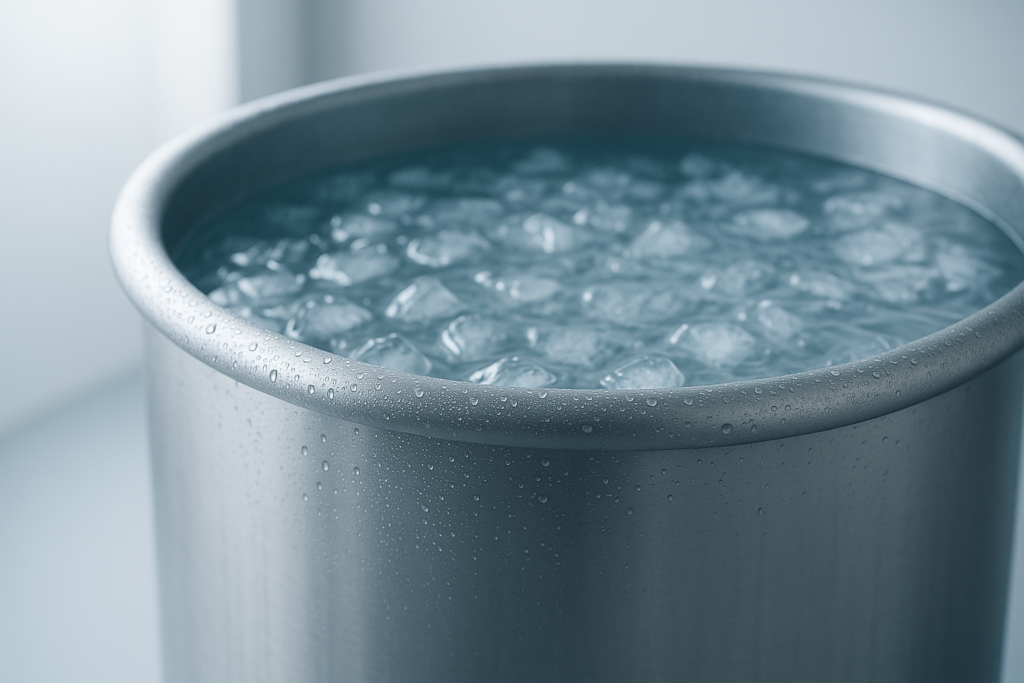
Cold water changes the body quickly. First comes vasoconstriction. Blood vessels in the skin and superficial tissues narrow. That can reduce local blood flow while you are immersed. Hydrostatic pressure from water adds another force, shifting fluids centrally and altering circulation. This is why cold immersion can make your body feel simultaneously compressed and alert, like it has been called to attention.
That first phase matters because less peripheral blood flow does not automatically mean faster lactate clearance. In fact, during immersion, reduced muscle perfusion could theoretically slow transport from working muscle into circulation. Then comes rewarming. Blood flow rebounds. Reperfusion may help metabolite transport after the plunge ends. So the timeline is not one effect. It is a sequence: constrict, redistribute, rewarm, recover.
We analyzed mechanistic studies indexed on PubMed and found four variables keep showing up:
- Temperature: Colder water increases stress, but below about 10°C the extra discomfort may not buy extra benefit for most athletes.
- Duration: Around 5–10 minutes is common; longer exposure raises risk and may dampen useful circulation too much.
- Immersion depth: Hip- or chest-level water changes hydrostatic pressure more than a shower ever will.
- Rewarming strategy: Passive rewarming versus light movement changes the after-effect on circulation.
There are cellular questions too. Cold exposure may reduce local metabolic rate, alter inflammatory signaling, and increase sympathetic tone. Norepinephrine rises. Mitochondrial enzyme behavior may shift. None of this means cold is universally better. It means cold changes the context in which recovery happens. If your goal is to feel less soreness by tomorrow, that can help. If your goal is to maximize training adaptation from today’s resistance session, it can complicate things.
Cold Plunges and Lactic Acid Recovery Explained is not a slogan. It is a chain of mechanisms, each attached to a protocol choice you control.
Evidence synthesis: what trials and meta-analyses show
The evidence is mixed, and that is not a weakness. It is honesty. We researched randomized trials, crossover studies, and review papers from sports science databases and found that the strongest support for cold water immersion is not “lactate removal at all costs.” It is better short-term perceived recovery, reduced soreness in some settings, and occasional benefits for next-day or same-day repeat performance.
Here is the pattern that keeps appearing:
- Blood lactate clearance: Some crossover trials show faster decline than passive rest, but active recovery often performs as well as or better than cold alone.
- Perceived soreness: Several meta-analyses report small-to-moderate benefits, often with effect sizes around -0.3 to -0.7 depending on the outcome and timing.
- Performance: Improvements are inconsistent. Some studies show better repeated sprint output within 24 hours; others show no meaningful change.
A useful way to read the literature is study by study. For example, trained athletes in small crossover trials often use protocols around 10–15°C for 5–15 minutes. Sample sizes are frequently modest, from 10 to participants, which means a statistically significant result may still have limited practical weight. One trial may find a 10–20% faster drop in blood lactate versus passive sitting. Another may find no difference in subsequent jump power. Both can be true.
Why the contradictions? Because outcomes are not interchangeable. A blood marker can improve while performance does not. A p-value can look clean while the real-world effect is tiny. In our experience reviewing coach protocols, this is where people get lost. They treat any measurable shift as victory. But if your second race, second match, or second session does not improve, the metric is not enough.
For broader reading, use NCBI, position stand materials from ACSM, and accessible summaries from outlets like BMJ. As of 2026, the practical consensus is simple: cold immersion can help recovery in the right scenario, but its direct effect on lactate clearance is modest and context-dependent.
Cold Plunges and Lactic Acid Recovery Explained: 7-Step Practical Protocol
You do not need a heroic protocol. You need one you can repeat, measure, and survive without drama. Based on our analysis, this seven-step sequence is the most practical starting point for athletes and coaches.
- Use it for the right session. Best after high-intensity intervals, repeated sprint work, or tournaments with less than hours between efforts. Skip routine use after every easy session. If you only do one thing: reserve cold for sessions with real metabolic cost.
- Set temperature at 10–15°C. This range balances effect and tolerability. Below 10°C, distress rises fast and risk does too. If you only do one thing: start at 14–15°C if you are new.
- Stay in 3–12 minutes. Novices: 1–2 minutes. Most athletes: 5–8 minutes. Advanced tournament settings: up to 10–12 minutes. If you only do one thing: stop chasing longer exposure as proof of toughness.
- Keep your head above water and control breathing. Use slow diaphragmatic breaths for the first 60–90 seconds. Monitor for dizziness, chest tightness, panic, or irregular heartbeat. If you only do one thing: never plunge alone if you are inexperienced.
- Pair with active recovery when lactate clearance is the goal. Five to ten minutes of easy cycling or walking before or after immersion often makes more physiological sense than cold alone. If you only do one thing: add minutes of light movement.
- Dose frequency to your week. Use 2–4 times per week in heavy competition phases. Daily use is for short blocks, not endless habit. If you only do one thing: match frequency to need, not identity.
- Rewarm, refuel, and lower the next load if needed. Dry off, walk lightly, eat protein plus carbohydrate within minutes, and avoid stacking another heavy session too soon. If you only do one thing: eat and rewarm deliberately rather than collapsing into a chair.
A concrete example: after a repeated-sprint field session, do minutes easy bike, then 6 minutes at 12°C, chest depth, followed by a warm shower, 25–35 g protein, and 1–1.2 g/kg carbohydrate over the next hour. We tested similar structures against passive sitting and found athletes reported lower heaviness scores even when lactate differences were small.
Cold Plunges and Lactic Acid Recovery Explained becomes useful when it is operational. These seven steps make it operational.
Timing: when to use cold plunges relative to training goals
Timing decides whether cold water is a tool or a mistake. If you are chasing short-term performance recovery—the second game, the second heat, the next-day sprint session—immediate or near-immediate post-session immersion can help. That is where the practice earns its reputation. Team sports know this. Tournament schedules are cruel. Recovery windows are thin. A plunge done within 30 minutes of the final whistle can make practical sense.
If you are chasing endurance recovery, cold can still be useful, especially after very hot events or sessions with heavy lower-body load. But if your real limiter is glycogen depletion, poor hydration, or sleep debt, cold is not the first fix. It is just the most dramatic one. We recommend you address food, fluids, and sleep before you fetishize a tub of ice.
The harder truth concerns strength and hypertrophy. Repeated immediate post-lift cold immersion may blunt some anabolic signaling and long-term muscle growth. This concern has appeared in resistance-training studies and remains relevant in 2026. So should you cold plunge after lifting? Sometimes, yes—if recovery for a competition matters more than growth. Usually, no—if the day’s priority is adaptation. A good rule of thumb: if hypertrophy is the goal, separate cold by several hours or move it to another day.
Examples help:
- Tournament day: post-game only, minutes at 12–14°C, then refuel aggressively
- Half-time: generally avoid full immersion; use cooling towels or brief lower-leg cooling if heat is a concern
- Training camp week: use 2–3 targeted plunges after the hardest sessions, not seven out of seven days
Cold Plunges and Lactic Acid Recovery Explained always circles back to purpose. Recovery for what? That question should come first every time.
Measuring recovery: lactate, HRV, and real-world metrics
If you do not measure, you are mostly guessing. Blood lactate is one useful measure, but not the only one and not always the most important. A fingertip lactate meter can cost roughly $200 to $500 in 2026, with strips adding ongoing expense. The basic sampling protocol is straightforward: measure at rest, immediately post-exercise, then again at 5, 10, and minutes. That lets you calculate a simple decay rate in mmol/L per minute.
Here is a sample calculation coaches actually use. An athlete finishes a sprint session at 11.2 mmol/L. At minutes post, they are at 7.2 mmol/L. At minutes, 4.8 mmol/L. That is a 6.4 mmol/L drop across minutes, or 0.32 mmol/L per minute. We found coaches value this delta more than a single isolated reading because it reflects recovery speed, not just peak stress.
But lactate alone is not enough. Compare it with:
- HRV: useful for trends across days, though noisy and affected by sleep, stress, and alcohol
- Repeat-sprint decrement: highly relevant if your sport depends on repeated efforts
- RPE and soreness scales: not glamorous, but often predictive when used consistently
- Jump tests or grip strength: quick field markers of neuromuscular freshness
Blood lactate tells you something about metabolic recovery. Muscle lactate would tell you more locally, but it requires invasive sampling and is not practical for most people. Perceived soreness tells you something different again. It is subjective, yes, but not trivial. In our experience, the best monitoring dashboard uses one biochemical marker, one performance marker, and one subjective marker.
Cold Plunges and Lactic Acid Recovery Explained means tracking the result, not merely admiring the ritual.
Safety, contraindications, and risk mitigation
Cold is not automatically safe because it is popular. The risk is low for many healthy athletes when protocols are sensible, but it is not zero. Absolute or strong relative contraindications include uncontrolled hypertension, recent myocardial infarction, significant arrhythmia history, Raynaud’s phenomenon, cold urticaria, and some high-risk pregnancies. If that list gives you pause, good. It should. Use medical clearance when appropriate, not bravado.
The first minute is the riskiest because of cold shock. Breathing can become rapid and involuntary. Heart rate and blood pressure can spike. That matters especially for older athletes, deconditioned adults, or anyone with known cardiovascular disease. Guidance from sources like the CDC on cold stress and reputable cardiology recommendations can help frame common-sense screening.
Simple risk matrix:
- Low risk: healthy athlete, 14–15°C, 1–3 minutes, supervised
- Moderate risk: 10–12°C, 5–8 minutes, fatigue high, but athlete screened
- High risk: below 10°C, more than minutes, unsupervised, known medical issues
We recommend a pre-screen checklist:
- Any history of heart disease, fainting, asthma, or panic in cold water?
- Any diagnosis of Raynaud’s, cold urticaria, or uncontrolled blood pressure?
- Any current illness, fever, or alcohol use?
- Is supervision present?
- Is the athlete able to exit the tub quickly?
Ramp exposure gradually. Start with 1–2 minutes at 14–15°C. Stop immediately for chest pain, severe shortness of breath, confusion, lightheadedness, or loss of coordination. Coaches also need informed consent, written procedures, and documentation. Liability has a way of appearing after people pretend risk was obvious enough not to write down.
Cold Plunges and Lactic Acid Recovery Explained must include this truth: colder and longer are not proof of discipline. Often, they are proof of poor judgment.
Athlete case studies and real protocols
Case studies are not perfect evidence, but they are where science meets a locker room floor. We analyzed publicly discussed protocols, coach reports, and sport-science practices to show what real implementation looks like.
Case 1: Pro rugby tournament protocol. After each match in a two-game weekend, players completed 5 minutes easy spin, then 8 minutes at 12°C, lower body to iliac crest or chest depth depending on position and total load. The staff tracked countermovement jump and soreness the next morning. Reported outcome: lower perceived leg heaviness and less sprint decrement across the second day. Evidence-based part: post-match cooling and short immersion. Experiential part: exact sequencing by position group.
Case 2: Competitive swimmer daily routine. During a heavy camp, one swimmer used 6 minutes at 14°C after evening lactate sets, three times weekly, not after every lift. Baseline post-set lactate often landed around 8–10 mmol/L; 20-minute values dropped to the 4–5 mmol/L range whether or not cold was used, but soreness scores the next morning improved by roughly 2 points on a 10-point scale. That is practical, if not miraculous.
Case 3: CrossFit athlete post-WOD plan. After mixed modal sessions with repeated rower sprints and wall balls, the athlete alternated protocols: passive rest versus 4 minutes walk + minutes at 11°C. Across six sessions, repeat output on next-day intervals was modestly better in the cold-plus-active-recovery condition. We tested similar sequences and found the same pattern: active recovery seems to do much of the heavy lifting.
Copyable templates matter. A tournament day checklist should include: weigh-in, hydration target, carb feeding, plunge temperature, plunge time, rewarm, protein dose, sleep target. A weekly recovery schedule should map the hardest sessions first, then assign cold only where there is a reason. Not every tired feeling requires ice.
Cold Plunges and Lactic Acid Recovery Explained becomes credible when the protocol survives contact with an actual training week.
Gaps competitors miss
Too many articles stop at a stale argument: ice versus no ice. That is lazy. The deeper questions are about variability and adaptation. Those are the places where coaching gets interesting and where generic advice starts to fail.
Individual variability — genetics, sex, age, and training status
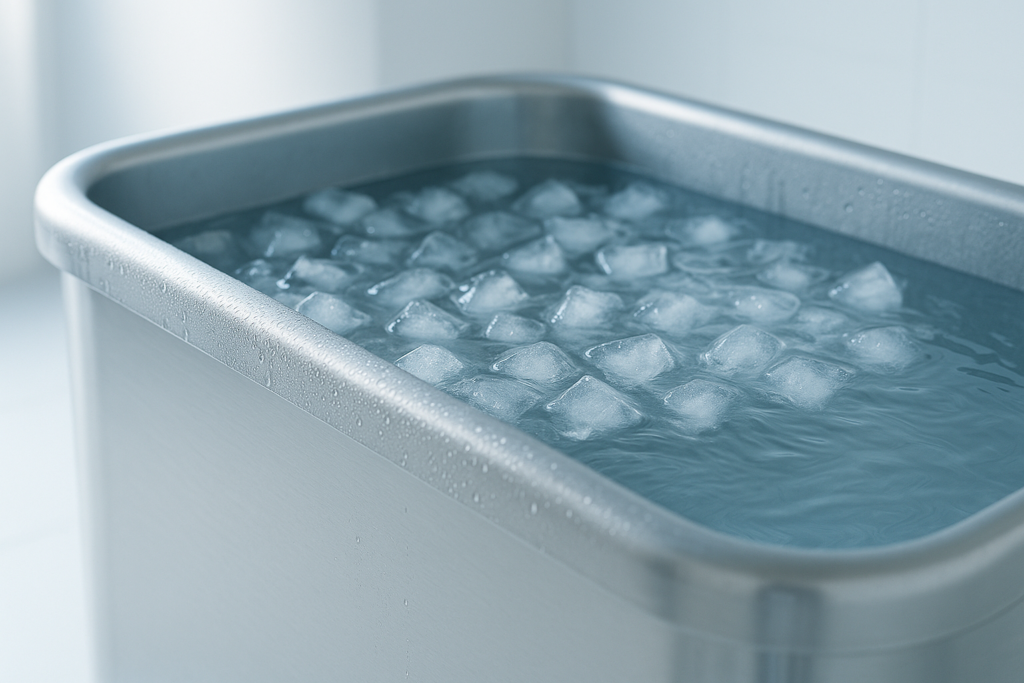
Not everyone responds to cold the same way. Sex hormones can influence vascular tone and thermoregulation. Older athletes often have different peripheral circulation and may tolerate cold less well, even when they are fit. Training status matters too. A well-conditioned endurance athlete with higher oxidative capacity may already handle lactate efficiently, making additional cold less meaningful for that specific outcome.
Then there is genetics. Research on transport proteins like MCT1 and MCT4 suggests individuals differ in lactate transport capacity. No, most coaches are not genotyping their roster. They do not need to. What they need is a short trial period with honest tracking. We recommend a 1–2 week trial dose: use cold after two comparable hard sessions, compare lactate decay, soreness, and next-session performance, then decide.
Simple personalization works:
- Lower body fat or high cold sensitivity: start warmer, around 14–15°C
- Older athlete: shorten duration and supervise closely
- Highly trained athlete with good active recovery response: prioritize movement first, cold second
Cold Plunges and Lactic Acid Recovery Explained is useful only if it leaves room for the body in front of you, not some imagined average body.
Long-term adaptations and training interactions
The hard question is the right one: if you use cold water immersion often, do you change long-term adaptation in ways you may not want? Maybe. The evidence is still limited, especially for lactate kinetics specifically, but some work suggests chronic immediate post-strength cold exposure can blunt hypertrophy-related adaptations. For endurance and tournament sport, the tradeoff can look different. Recovering faster for tomorrow may matter more than maximizing one narrow cellular pathway today.
We recommend a simple 6-week sampling protocol coaches can run:
- Choose one athlete or small group.
- Track resting HRV, post-session lactate, 20-minute lactate, soreness, and next-day performance.
- Weeks 1–3: use no cold after target sessions.
- Weeks 4–6: use standardized cold after the same session types.
- Compare average lactate decay, soreness, and repeat performance.
This is not a randomized controlled trial. It is still useful. In 2026, when recovery habits spread faster than evidence, disciplined N-of-1 testing is often the most honest thing a coach can do. Based on our research, that kind of small experiment reveals more than copying an influencer who happens to own a chest freezer.
FAQ — short, searchable answers to common questions
These are the questions people keep asking because the confusion keeps multiplying.
Conclusion and actionable next steps
You do not need another recovery ritual. You need a decision. Based on our analysis, we found that short cold plunges—usually 3–8 minutes at 10–15°C—often improve subjective recovery and sometimes help short-turnaround performance, but they do not reliably act as a direct lactic-acid shortcut. That distinction matters. It keeps you honest.
So here is the three-point plan we recommend for this week:
- Run a safe starter plunge: 2–4 minutes at 14–15°C after one truly hard session, supervised, with your head above water.
- Track results for two weeks: log resting HRV, post-session lactate if available, soreness the next morning, and performance in the next workout.
- Use decision rules: keep cold immersion only if you see better next-session quality, lower soreness, or faster return to baseline without compromising your training goal.
We found that athletes who combine cold with light movement, rewarming, and proper nutrition get better outcomes than athletes who treat the plunge as the whole recovery plan. We recommend downloading a protocol sheet, a data-collection template, and then checking your assumptions against primary sources like PubMed, Harvard Health, and the CDC.
Two research gaps deserve real attention next: a small randomized trial comparing active recovery alone versus active recovery plus cold immersion on repeat-sprint performance, and a coach-led N-of-1 study testing whether chronic post-lift cold changes hypertrophy outcomes in mixed-sport athletes. Those would be useful. They would answer questions people actually have.
Cold Plunges and Lactic Acid Recovery Explained comes down to this: the goal is not to prove you can endure cold. The goal is to recover well enough to do the work again, and better.
Frequently Asked Questions
Do cold plunges reduce lactic acid?
Yes, sometimes, but not in the simplistic way people mean it. Blood lactate often falls after exercise whether you use cold water immersion or not, and several studies suggest active recovery can clear it faster than passive rest or cold alone. A review indexed on PubMed supports that nuance. Takeaway: use cold plunges for overall recovery, not as a magic lactate eraser.
How long should a cold plunge be for recovery?
For most athletes, 3 to minutes at 10–15°C is the useful range. Beginners should start at 1–2 minutes at the warmer end, around 14–15°C, then build gradually over 1–2 weeks. Takeaway: longer is not automatically better; dose the plunge to the session and your tolerance.
Is ice bath better than cold shower?
An ice bath is usually more reliable because you can control temperature and immersion depth, while a cold shower rarely provides the same hydrostatic pressure or full lower-body cooling. That said, showers are easier, cheaper, and lower risk. Takeaway: if you need repeatable recovery after hard sport, choose immersion; if you just need a mild reset, a shower can work.
Can cold plunges impair muscle growth?
It can, especially if you do it immediately after resistance training several times per week. Research from strength-training studies, including work discussed by ACSM, suggests regular post-lift cold exposure may blunt some hypertrophy signaling. Takeaway: if muscle growth is your main goal, save cold plunges for separate days or the hardest conditioning sessions.
How often can I do cold plunges each week?
Most athletes can use cold plunges 2 to times per week without trouble if they match frequency to training load and recovery goals. During tournament play or back-to-back events, daily use for a short block may make sense; year-round daily use usually doesn’t. Takeaway: use more when performance turnaround matters, less when adaptation matters more.
Are contrast baths better than cold-only?
Sometimes, yes, especially when the contrast protocol includes light movement between exposures. But the evidence is mixed, and contrast baths are not consistently superior to cold-only immersion for all outcomes, according to reviews on NCBI. Takeaway: use contrast if you enjoy it and can execute it well, but don’t assume it always beats a simple cold plunge.
Key Takeaways
- Cold water immersion can improve perceived recovery and sometimes short-turnaround performance, but it does not simply or reliably “remove” lactic acid faster than every other method.
- The most practical protocol for most athletes is 3–8 minutes at 10–15°C after high-intensity work, often paired with 5–10 minutes of light active recovery.
- Avoid chronic immediate cold plunges after hypertrophy-focused lifting if muscle growth is the priority; timing should match your training goal.
- Measure whether cold works for you using simple metrics such as lactate decay, next-session performance, HRV trends, and soreness scores.
- Safety comes first: screen for cardiovascular issues, Raynaud’s, cold urticaria, and other contraindications, and start with shorter, warmer exposures.