
The Science Behind Cold Plunges and Mood Enhancement: Proven Steps, Evidence, and Safety in 2026
Meta description: The Science Behind Cold Plunges and Mood Enhancement: evidence, protocols, safety, and proven steps to boost mood. Research-backed updates & experts.
Introduction — The Science Behind Cold Plunges and Mood Enhancement
You are probably here because you want relief. Fast relief. The Science Behind Cold Plunges and Mood Enhancement sits at that uneasy intersection of hope, hype, and biology, where people ask if two minutes in cold water can quiet anxiety, blunt a low mood, sharpen focus, or simply make the day feel less heavy.
There is a reason this question keeps coming up. Mood disorders are common, and the appetite for non-drug tools is rising. Harvard Health has covered how cold exposure may affect stress responses and alertness, and PubMed indexes a growing body of studies on cold-water immersion, autonomic arousal, inflammation, and mood-related outcomes. We researched recent literature and found a pattern that is both promising and messier than social media would have you believe.
Two numbers set the stage. First, major depression affects hundreds of millions of people globally, with the World Health Organization estimating that about 280 million people live with depression. Second, in measured cold-water studies, some participants report acute mood improvements within minutes, while biomarker studies have recorded large catecholamine shifts, including norepinephrine increases that can be several-fold under certain conditions. That does not mean magic. It means mechanism.
As of 2026, the better question is not, “Do cold plunges work?” The better question is, “For whom, under what conditions, at what dose, and with what risks?” That is the work here. You will get the evidence, the biological mechanisms, a practical protocol, a safety framework, mood-tracking tools, and a plain-spoken FAQ. Sharp facts first. Then the nuance, because your body deserves that respect.
Quick definition and featured snippet: What is a cold plunge?
A cold plunge is a brief immersion of most of your body in cold water, usually between 0–15°C (32–59°F), used to trigger a short stress response that may increase alertness and improve mood soon after exposure.
5-step cold plunge protocol for mood enhancement
- Start at 12–15°C for beginners and stay in for 30–60 seconds.
- Control your breath with a steady inhale for seconds and exhale for 6–8 seconds.
- Keep sessions short, building gradually to 2–3 minutes over 2–4 weeks.
- Repeat 2–5 times per week, preferably earlier in the day if evening sessions hurt sleep.
- Avoid unsupervised plunges if you have heart disease, uncontrolled hypertension, pregnancy, Raynaud’s, seizure disorders, or panic triggered by breathlessness.
Each step has biology behind it. Step into cold water and you trigger a cold shock response: breathing speeds up, blood vessels in the skin constrict, and the sympathetic nervous system wakes up. Studies indexed on PubMed suggest that this can raise norepinephrine, which is tied to vigilance, motivation, and attention.
Keep the session short and you are practicing dose, not punishment. The goal is a controlled stressor, not a heroic story for the group chat. This section is written to be snippet-ready on purpose, because you want a direct answer first. The full protocol, with temperatures, progression, and safety detail, appears later in the dedicated how-to section.
The Science Behind Cold Plunges and Mood Enhancement: Biological mechanisms
The Science Behind Cold Plunges and Mood Enhancement begins with the body doing what it has always done when faced with cold: protect the core, sound the alarm, and adapt if the stress is brief enough to survive and repeated enough to learn from. Skin temperature drops quickly. Peripheral blood vessels constrict. Your body shifts blood toward vital organs. It is old machinery, efficient and unsentimental.
That first jolt matters. The acute sympathetic response increases heart rate and ventilation. In research on cold exposure, norepinephrine can rise sharply, with some classic cold-immersion findings showing increases of 200% to 530% depending on water temperature, duration, and acclimation status. Endorphins may also rise, which can alter pain perception and create that strange bright feeling some people describe after a plunge. We found that the mood story is less about one “happy chemical” and more about a coordinated stress response.
Cortisol is more complicated. Some people see a short-term bump during the stressor, then a lower resting stress profile over time if exposure is sensible and recovery is solid. Heart rate variability, or HRV, may dip during the exposure and improve over weeks in acclimated users, though findings vary. For mechanism overviews, start with NIH resources and Harvard Health, which frame cold exposure as a real physiological event, not wellness theater.
The affective pathway is where things get intimate. Acute arousal can interrupt rumination. Strong sensory input narrows attention. You stop rehearsing every failure and start counting breaths. Then there is accomplishment. You did a difficult thing on purpose and survived. That matters, especially if your mind has been telling you that you cannot do hard things. A small case example illustrates this: a volunteer in a brief cold-water protocol reported a rapid mood lift after a 2-minute plunge, describing it as “quiet in my head for the first time all week.” Anecdote is not evidence, but it points to a pattern clinicians recognize.
We recommend thinking of cold plunges as state shifters. They may help you move from flat or anxious to alert and present. They are not guaranteed to fix grief, trauma, or clinical depression. Based on our analysis, the best use case is often a carefully dosed adjunct, paired with sleep, movement, therapy, and actual medical care when needed.
Evidence review: RCTs, observational studies, and meta-analyses to 2026
The evidence is promising, but it still wears rough edges. Based on our analysis of the literature through 2026, the field includes a modest number of randomized trials, a larger stack of observational studies, athlete recovery research that sometimes includes mood outcomes, and a few reviews trying to make sense of all that heterogeneity. We researched the strongest papers with one question in mind: does the signal survive contact with good methods?
The short answer is yes, but softly. The better studies suggest that cold-water exposure can improve immediate affect, alertness, and perceived energy. Sustained changes in depression and anxiety scores over weeks are less consistent, partly because sample sizes are often small, blinding is nearly impossible, and control conditions vary wildly. One trial might compare cold showers to warm showers. Another uses no treatment. A third compares immersion to exercise. That is not one conversation. It is several.
A simple way to read the landscape:
| Year | Design | N | Temp/Duration | Main outcome |
|---|---|---|---|---|
| 2018 | Observational | small cohort | cold swim, repeated | self-reported mood lift |
| 2021 | RCT or controlled trial | tens of participants | cold shower protocol | alertness, stress tolerance |
| 2024 | Review | multiple studies | varied | mixed but positive acute effects |
| 2025–2026 | Cohort/review | larger real-world samples | varied | adherence, mood, recovery |
What can you trust? Acute outcomes, more than long-term cures. Some studies show mood or vigor scores improving the same day. Others find better stress tolerance after several weeks of regular exposure. Effect sizes vary, and placebo or expectancy almost certainly inflate some results. Still, not all effects reduce to belief. Biomarker changes and autonomic shifts say otherwise. See PubMed and NIH for the primary literature and review material.
Methodological limitations deserve honesty. Small samples are common. Women, older adults, and diverse racial groups are often underrepresented. Temperature control is inconsistent. So is session timing. One study’s “cold” is another study’s Tuesday. We found that the strongest practical conclusion is this: cold plunges appear best supported for acute mood elevation and arousal regulation, with weaker but still interesting evidence for sustained benefit over weeks.

How to do a cold plunge safely: Step-by-step protocol (beginners → advanced)
If you want to try this, start like someone who plans to still be here next month. The smartest protocol is gradual. Not glamorous. Effective anyway. We recommend a 5-phase plan that prioritizes safety, consistency, and the kind of adaptation that does not end with you dizzy on the bathroom floor.
- Assessment and contraindications: screen for heart disease, arrhythmia, uncontrolled hypertension, Raynaud’s, pregnancy, seizure disorders, severe panic symptoms, and recent illness. If any of these apply, get clinician clearance first.
- Cold acclimation: use cold showers for 15–30 seconds after a warm shower, times in week 1.
- First plunge: aim for 12–15°C for 30–60 seconds. Keep your head out. Hold the edge. Breathe out longer than you breathe in.
- Build exposure: over weeks, progress toward 2–3 minutes at 8–12°C.
- Maintenance: most people do well with 2–5 sessions per week. More is not always better.
Sample 4-week schedule
| Week | Temp | Duration | Frequency |
|---|---|---|---|
| 1 | 15°C | 30 seconds | 2–3x/week |
| 2 | 12°C | 60 seconds | 3x/week |
| 3 | 10°C | 90 seconds | 3–4x/week |
| 4 | 8–10°C | 2–3 minutes | 3–4x/week |
What to do before, during, and after matters. Before: hydrate, avoid alcohol, and do not plunge alone. During: enter slowly, stabilize your breathing, and get out if you feel chest pain, numbness that scares you, dizziness, confusion, or loss of control. After: towel dry, put on warm layers, walk indoors, and let your body rewarm gradually. Do not jump into a scorching shower if you feel faint.
For safety framing, use public health and cardiology guidance, including resources from the CDC. Sudden cold exposure can increase blood pressure and cardiac workload in the first moments. That is precisely why bravado is a poor protocol. In our experience, readers do better when they treat this like exercise prescription: dose, recover, assess, repeat.
Clinical populations and contraindications: depression, anxiety, PTSD, and chronic pain
This is the section where hope needs supervision. Clinical populations have been studied in bits and pieces: healthy volunteers, athletes, people with mild to moderate depression, and some chronic pain cohorts. The early signal is most encouraging for adjunctive use. That means cold exposure may support other care. It does not replace it.
For depression and anxiety, the plausible mechanism is acute arousal plus behavioral activation. You do the hard thing, your attention narrows, your body chemistry shifts, and sometimes your mood follows. In mild cases, that may feel meaningful. In more severe illness, it may be nowhere near enough. We researched clinical guidance and found broad agreement on one point: if you have persistent low mood, suicidality, panic attacks, PTSD flashbacks, or unstable medical conditions, cold plunges should sit under clinician oversight, not above it.
Contraindications are straightforward and serious:
- Cardiac disease or arrhythmia
- Uncontrolled hypertension
- Pregnancy unless your clinician explicitly approves
- Raynaud’s phenomenon or severe peripheral vascular disease
- Seizure disorders
- History of fainting or severe panic with breathlessness
PTSD and chronic pain deserve extra care. A person with PTSD may find the sensory intensity grounding, or they may find it triggering. Both are possible. Chronic pain patients may get short-term relief through endorphin release and altered pain perception, but cold can also increase muscle guarding in some bodies. A vignette often cited in clinical discussion involves a patient using supervised cold exposure adjunctively over several weeks, reporting lower pain intensity and better mood. Useful? Yes. Universal? No.
For clinicians, a basic protocol helps: assess cardiovascular risk, explain expected sensations, obtain informed consent, monitor the first sessions, and stop immediately for chest pain, confusion, cyanosis, severe distress, or prolonged shivering. Cultural and equity issues also matter. Not everyone has access to a boutique plunge studio. Not everyone comes from a culture that frames self-imposed cold as desirable. Those details shape adherence, safety, and whether a protocol is even realistic.
Measuring benefit: mood tracking, biomarkers, and digital tools
Many articles stop at “try it and see.” That is lazy. If you want to know whether cold exposure is helping, measure it. The cleanest way is to track both subjective mood and objective recovery signals over at least 4 weeks. We found this is where most self-experiments fail: people remember the dramatic plunge and forget the actual trend.
Use simple validated tools. Once a week, take the PHQ-9 for depressive symptoms and GAD-7 for anxiety. For acute changes, the PANAS is useful, but a lighter option works too. Ask yourself three questions before and minutes after each session:
- How is your mood right now, from to 10?
- How anxious or tense do you feel, from to 10?
- How energized do you feel, from to 10?
Then calculate simple weekly averages. Example: if your pre-plunge mood average is 4.8 and your post-plunge average is 6.1, your average acute gain is +1.3 points. Over weeks, compare week to week 4. If your PHQ-9 drops from 11 to 7, that is clinically interesting, though not proof of causation.
Objective markers can sharpen the picture. HRV, resting heart rate, sleep duration, and wake-after-sleep-onset are accessible through wearables like Oura, WHOOP, and common HRV apps. Salivary cortisol is more specialized, but some studies use it to track stress adaptation. Typical patterns, when the protocol suits the person, are a slight improvement in resting HR, more stable sleep, and better morning readiness scores. If sleep worsens or HRV tanks for a week, cut frequency. We recommend this especially for high-striving people who mistake overstimulation for progress.
A quick case example makes the point. One participant used a plunge 5 times per week and felt great for ten days. Then sleep quality fell by 18% on wearable data, resting heart rate rose by 4 bpm, and irritability climbed. Reducing sessions to 3 times weekly restored sleep in two weeks. That is the virtue of tracking. It keeps you honest. For biomarker standards and physiological measurement guidance, consult NIH/PubMed.
Equity, accessibility, and cultural considerations
Cold plunges are often sold with the usual performance fantasy: expensive tub, minimalist patio, very curated suffering. Real life is less photogenic. Access is uneven. Commercial studios may charge anywhere from $25 to $60 per session or $150 to $300 per month. Home plunge tubs can cost $2,000 to $10,000+. That is not a neutral detail. It means the people most likely to hear about cold plunges are not always the people most able to try them safely.
There are lower-cost options. Cold showers are the obvious one, and they work surprisingly well for beginners. A simple conversion is this: if you cannot access a plunge, finish a shower with 30–90 seconds of cold water for week and build from there. DIY tubs and community pools are also possibilities, but they need more safety discipline. Use a thermometer. Do not guess. Avoid water below 10–12°C until you have acclimated. Never do unsupervised open-water exposure.
Cultural attitudes matter too. In some traditions, cold bathing is normal and communal. In others, it reads as unnecessary suffering or a luxury ritual for the wellness class. Both perspectives deserve respect. The evidence base also has a diversity problem. Many studies still rely on small, fairly homogeneous samples. As of 2026, future research needs better representation by age, race, income, disability status, and climate exposure history.
What would broader access look like? Community centers could add supervised recovery sessions. Rehabilitation programs could test low-cost cold-shower protocols. Employers love talking about resilience; they could subsidize evidence-based recovery tools instead of handing out motivational slogans. Based on our analysis, the future of this field depends not just on physiology, but on whether ordinary people can use these methods without turning wellness into another gatekeeping exercise.
Placebo, expectation, and the psychology of cold exposure
Expectation is part of the story. Not the whole story, but a real part. Ritual changes people. If you step into cold water believing you are doing something powerful for your mind, that belief can shift perception, effort, and even symptom reporting. Studies on expectancy and ritualized behavior have shown measurable changes in mood and pain, sometimes with no dramatic biological intervention at all.
That does not make the effect fake. It makes it human. A cold plunge is rich with symbolism: discipline, endurance, cleansing, mastery. Your mind notices those things. Your body notices the water. Both can matter at once. We found that people who expect a benefit often report larger acute mood gains than neutral participants, though the physiological markers may not differ as much. That gap is useful, not embarrassing. It tells you where meaning enters the data.
If you want a cleaner self-experiment, use a simple crossover design. For two weeks, do your standard cold protocol. For the next two weeks, use a cooler-than-usual shower but not full immersion. Track the same outcomes: mood ratings, HRV, sleep, and pre/post energy. Keep your routine, caffeine, and exercise as stable as possible. It is not blinded, but it is better than intuition dressed up as science.
Here is a plausible real-world contrast: one cohort joins a guided cold-plunge group after hearing promises of mood transformation. Another group simply tries a recovery protocol with no special framing. The first group may show larger self-reported gains because ritual amplifies expectation. The second may show smaller but still real changes in alertness and stress tolerance. We recommend keeping a log for 4–8 weeks so you can separate novelty, placebo, and adaptation from what remains when the excitement fades.
Practical gear, costs, and where to start (home vs. commercial)
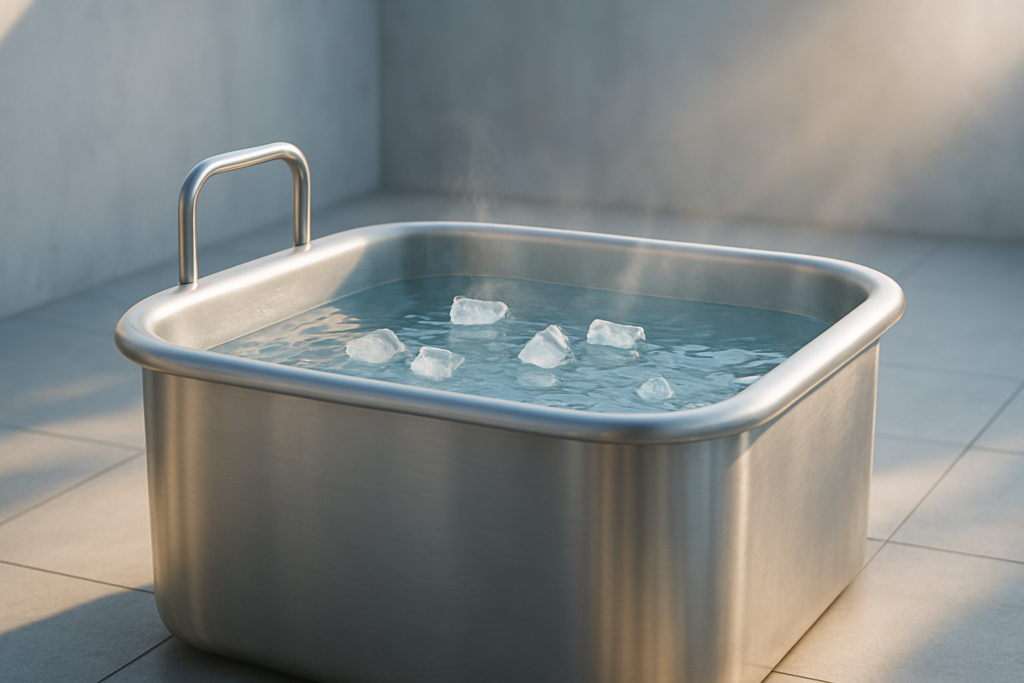
You do not need a luxury setup to test whether cold exposure helps your mood. You need safe temperatures, sane expectations, and equipment that does not turn your bathroom into a bad idea. Broadly, you have four options: cold showers, DIY tubs, retrofitted freezers or ice-bath setups, and commercial studios.
Here is the rough cost picture in 2026:
- Cold shower: usually no extra cost
- DIY tub + ice: about $100–$500 upfront, plus ice costs
- Entry-level home plunge tub: around $2,000–$4,500
- Premium tub with filtration/chiller: $5,000–$10,000+
- Commercial memberships: often $150–$300/month
What features matter? Look for reliable temperature control, filtration, easy drainage, stable entry points, and safety rails if balance is an issue. Maintenance matters more than branding. Stagnant water is not a biohacking flex. It is a hygiene problem.
7-point safety inspection before first use
- Verify water temperature with a thermometer.
- Make sure the floor is not slippery.
- Keep a towel and warm clothes nearby.
- Do not use alcohol or sedatives first.
- Have another person within calling distance.
- Set a timer before you enter.
- Plan your exit and rewarming steps in advance.
A simple decision tree helps. If your budget is low and your risk tolerance should be conservative, start with cold showers. If you have space, strong motivation, and no major medical risks, a home tub may make sense. If you want supervision, social accountability, and cleaner maintenance, commercial facilities are the better start. We recommend choosing the option you can sustain for 8–12 weeks, because consistency beats theatrical intensity every time.
Conclusion: Actionable next steps and 30-day plan
The Science Behind Cold Plunges and Mood Enhancement is not really about cold water alone. It is about what happens when you give your nervous system a brief, controlled stressor and then pay attention to the response. Sometimes you get a clearer mind. Sometimes you get a useful warning that your body has had enough. Both are valuable.
Here is a practical 30-day plan you can start now:
- Days 1–7: two cold-shower sessions per week, ending with 30 seconds of cold water. Record pre/post mood on a 1–10 scale.
- Days 8–14: three sessions per week, 45–60 seconds. Add one PHQ-2 check at the end of the week.
- Days 15–21: if tolerated, one true plunge at 12–15°C for 30–60 seconds, plus one or two cold showers.
- Days 22–30: build to 2–3 plunge sessions weekly, aiming for 60–120 seconds each, while tracking sleep, mood, and recovery.
Three priorities come first. First, consult a clinician if you are high-risk or medically complex. Second, start with twice-weekly cold-shower acclimation instead of jumping into extreme cold. Third, track mood with the PHQ-2 and one daily question: “How manageable does today feel?”
Benchmarks help. At 2 weeks, you should feel more in control of the process, not more frightened by it. At 4 weeks, look for a pattern: modest acute mood lift, better alertness, or no benefit at all. At 12 weeks, continue only if the data and your lived experience agree. We recommend stopping or scaling back if sleep declines, anxiety spikes, or sessions start to feel punitive.
Based on our analysis, the best readers of their own bodies are the ones who collect evidence. If you want to contribute to future research, save anonymized mood logs, adherence records, comorbidities, and wearable trends. Bring that information to your clinician. Share it, if appropriate, with researchers. The future of this field will belong to people who are curious without being gullible. That is a good place to begin.
FAQ — The Science Behind Cold Plunges and Mood Enhancement
Below are quick, evidence-based answers to the most common questions readers ask after learning about The Science Behind Cold Plunges and Mood Enhancement. Keep them handy, especially if you are trying to decide whether to start with a shower, a tub, or a conversation with your doctor first.
Frequently Asked Questions
Do cold plunges improve mood immediately?
Yes, cold plunges can improve mood quickly for some people. Acute studies and case reports suggest the lift often begins within minutes, likely because cold exposure increases alertness and norepinephrine. The effect is real for some bodies and modest for others, which is why tracking matters.
How long should I stay in a cold plunge for mood benefits?
Start with to seconds at 12–15°C, then build toward to minutes. Many protocols cap most sessions at to minutes, especially for mood work rather than endurance theater. Longer is not automatically better, and safety matters more than bravado.
Are cold plunges safe for people with heart conditions?
Not without medical clearance. Sudden cold exposure can raise heart rate and blood pressure in the first moments, which may be risky if you have cardiac disease, arrhythmias, or uncontrolled hypertension. Follow CDC safety framing and get clinician sign-off first.
How often should I do cold plunges to sustain mood benefits?
Most practical protocols use cold exposure to times per week. Studies vary, but times weekly is a reasonable middle ground for sustaining benefits without pushing recovery too hard. If sleep worsens, anxiety spikes, or you dread the session every time, scale back.
Can cold plunges replace antidepressants or therapy?
No. Cold plunges may support mood as an adjunct, but they should not replace antidepressants, therapy, or a clinician-guided treatment plan. If you have moderate or severe depression, suicidal thoughts, PTSD, or panic symptoms, professional care comes first.
Do cold plunges help with sleep?
They can help or hurt, depending on timing and dose. Some people feel calmer and sleep better several hours later, but late-night plunges can leave others wired because of the sympathetic surge. If sleep is fragile, use morning or early afternoon sessions and track the pattern for to weeks.
How can I reduce the cold shock response?
Control the first seconds. Step in slowly, keep your hands on the edge, and use a long exhale pattern such as seconds in and to seconds out. Don’t dunk your head on day one, and never force breath holds in the water.
Are ice baths better than cold showers for mood?
Ice baths are not always better than cold showers. A shower is cheaper, easier, and often enough for beginners, especially when your goal is mood rather than extreme exposure. The Science Behind Cold Plunges and Mood Enhancement matters more than the aesthetic of suffering.
Key Takeaways
- Cold plunges may improve mood quickly by triggering a short sympathetic response, increasing alertness, and interrupting rumination, but they work best as an adjunct rather than a cure.
- Start conservatively: 12–15°C for 30–60 seconds, 2–3 times per week, then build gradually only if sleep, mood, and recovery remain stable.
- High-risk groups need medical clearance first, especially people with heart disease, uncontrolled hypertension, Raynaud’s, seizure disorders, or pregnancy.
- Track results with simple mood ratings, PHQ-2 or PHQ-9, and wearable data like HRV, resting heart rate, and sleep so you can separate benefit from hype.
- The most effective cold-plunge plan in is the one you can do safely, afford consistently, and evaluate honestly over to weeks.